
Blog

Blog
Welcome to the Integrated Blog. We are committed to delivering cutting-edge industry insights, in-depth technical expertise, and actionable post-purchase guidance, empowering you with knowledge and solutions that fuel innovation in the security sector. Whether you're an industry veteran or new to the field, discover tailored resources and expert support here. At Integrated, let's redefine the future of security technology—together.
AI Face Recognition Attendance System for Modern Workforce
Recruiting is a challenge, but management can be an even greater hurdle; attendance records are frequently the primary source of frustration for HR and business owners. Implementing the wrong time clock system can lead to monthly reconciliation nightmares at best, and regulatory non-compliance at worst. However, selecting the right attendance system recommendation can save time, streamline manpower, accelerate payroll processing, and effectively eliminate "buddy punching" issues. From traditional punch clocks and fingerprint scanning to the increasingly ubiquitous facial recognition attendance systems, many businesses raise critical questions: Is face recognition legal? Can it be bypassed? This article deconstructs the functionalities and differences between various systems to help you identify the most sophisticated solution tailored to your organizational requirements.
What is Attendance and Why Do Businesses Need One?
An attendance system is a professional-grade tool used to record employee clock-in/out times and overall
presence. It serves as the foundational data for calculating working hours, overtime, leave, and payroll.
Under the Hong Kong Employment Ordinance and relevant labor regulations, employers are legally
obligated to maintain clear and accurate attendance records, which must be made available for inspection
by employees or the Labor Department when necessary.
A state-of-the-art attendance system empowers businesses to:
- Precisely record attendance down to the minute.
- Mitigate human calculation errors.
- Lower the risk of labor disputes.
- Significantly enhance HR administrative efficiency.

Comparison of Common Time Clock Systems
Fingerprint Time Clock Machines
Fingerprint scanners utilize biometric identification to ensure "physical presence" during clock-in.
Key Features:
- Virtually eliminates proxy punching.
- Low learning curve for employees.
- Suitable for businesses with fixed office locations.
Note: Most legacy fingerprint data must be manually downloaded and processed for payroll, which offers limited efficiency gains.
Traditional Punch Clocks and Card-Based Time Clock Systems
These systems use paper cards or IC proximity cards and remain a legacy choice for some SMEs.
Key Features:
- Low initial cost and simple operation.
- Highly susceptible to buddy punching.
- High ongoing costs for consumables, storage, and manual reconciliation.
- Incompatible with field work or flexible working arrangements.
Cloud-Based and Mobile App Attendance Systems
Mobile solutions leverage GPS, Wi-Fi, or IP positioning to record attendance, a popular choice for startups
and foreign businesses.
Key Features:
- Location-independent; ideal for field staff and WFH (Work from Home).
- Seamlessly integrates leave, overtime, and payroll.
- Automated payroll generation at month-end saves significant time.
Potential downside: Requires an initial adaptation period for employees.
How Facial Recognition Clock-In Systems Work
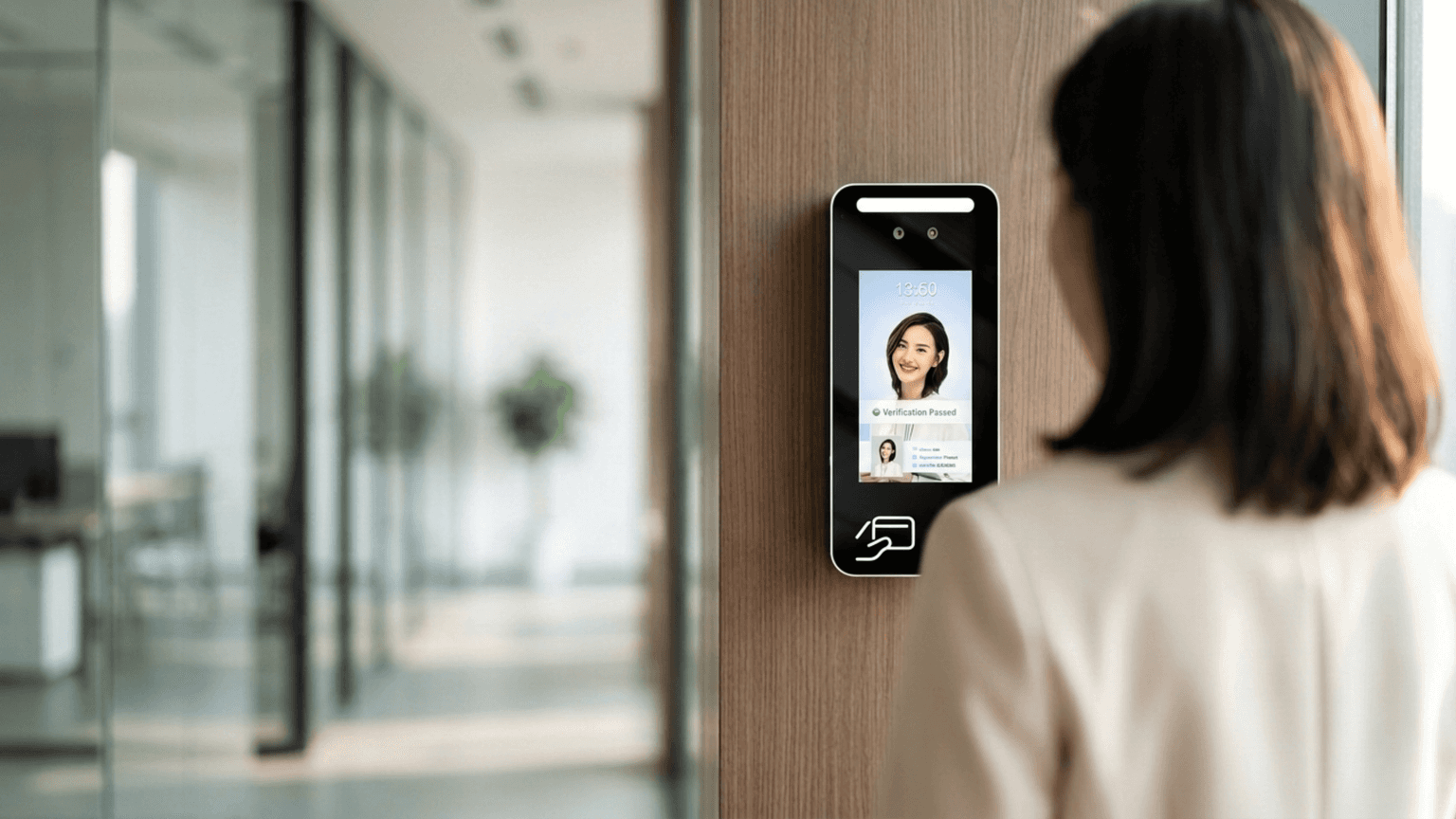
Our facial recognition systems use advanced AI algorithms to enable clocking through real-time identity
verification via a camera.
Key Features:
- Non-intrusive and contactless verification.
- Practically eradicates the possibility of buddy punching.
- Rapid scanning speeds; ideal for high-headcount organizations.
- Fully integrable with cloud systems for automated work-hour calculations.
As the technology has matured, it has become the premier upgrade choice for forward-thinking enterprises.

How to Choose the Right Time Clock System for Your Company?
Selecting a system involves more than comparing price points; it requires a strategic evaluation of your operational needs:
Employee Count and Turnover Rate
As headcount increases, the complexity of attendance management grows exponentially. While traditional clocks might suffice for small teams, the manual reconciliation costs for larger groups are prohibitive. A high-efficiency attendance system, such as a face scanning system, reduces this administrative burden for the HR team.
Field Work, Shifts, or Flexible Hours
If your organization involves off-site work, multi-location branches, or shift rotations, physical hardware alone is insufficient. Cloud-based or facial clocking systems integrate these disparate modes into a unified database, preventing buddy punching and manual salary adjustments.
Automation of Payroll (Auto-Payroll)
The primary pain point for HR is often the month-end calculation. Systems that support automated payroll convert attendance data directly into salary results, significantly increasing efficiency, a core consideration for businesses seeking digital transformation.
Tolerance for "Buddy Punching"
If your organization demands high attendance accuracy or has previously encountered proxy-punching disputes, it is essential to consider a solution with a higher tier of identification. Compared to traditional card-based or fingerprint clocking, facial recognition attendance systems offer a distinct advantage in preventing "buddy punching." Furthermore, it significantly mitigates the risk of records being questioned or the facial recognition system being bypassed.
Budget and Long-term Scalability
When selecting an attendance system, enterprises must look beyond initial costs and evaluate the
flexibility for future expansion, headcount growth, and system upgrades. For businesses currently
planning digital transformation or experiencing rapid growth, assessing the legality of facial recognition,
privacy compliance, and system scalability early on is a strategic move to avoid the costs of future
redundant equipment replacements.
In short, the larger the workforce and the more complex the management, the more an enterprise stands
to gain from highly integrated cloud solutions or high-precision, high-security face scanning attendance
system recommendations. In the long run, these professional-grade systems are more time- and
labor-efficient and ensure stricter compliance.

Key Features to Consider: Facial Recognition Attendance System
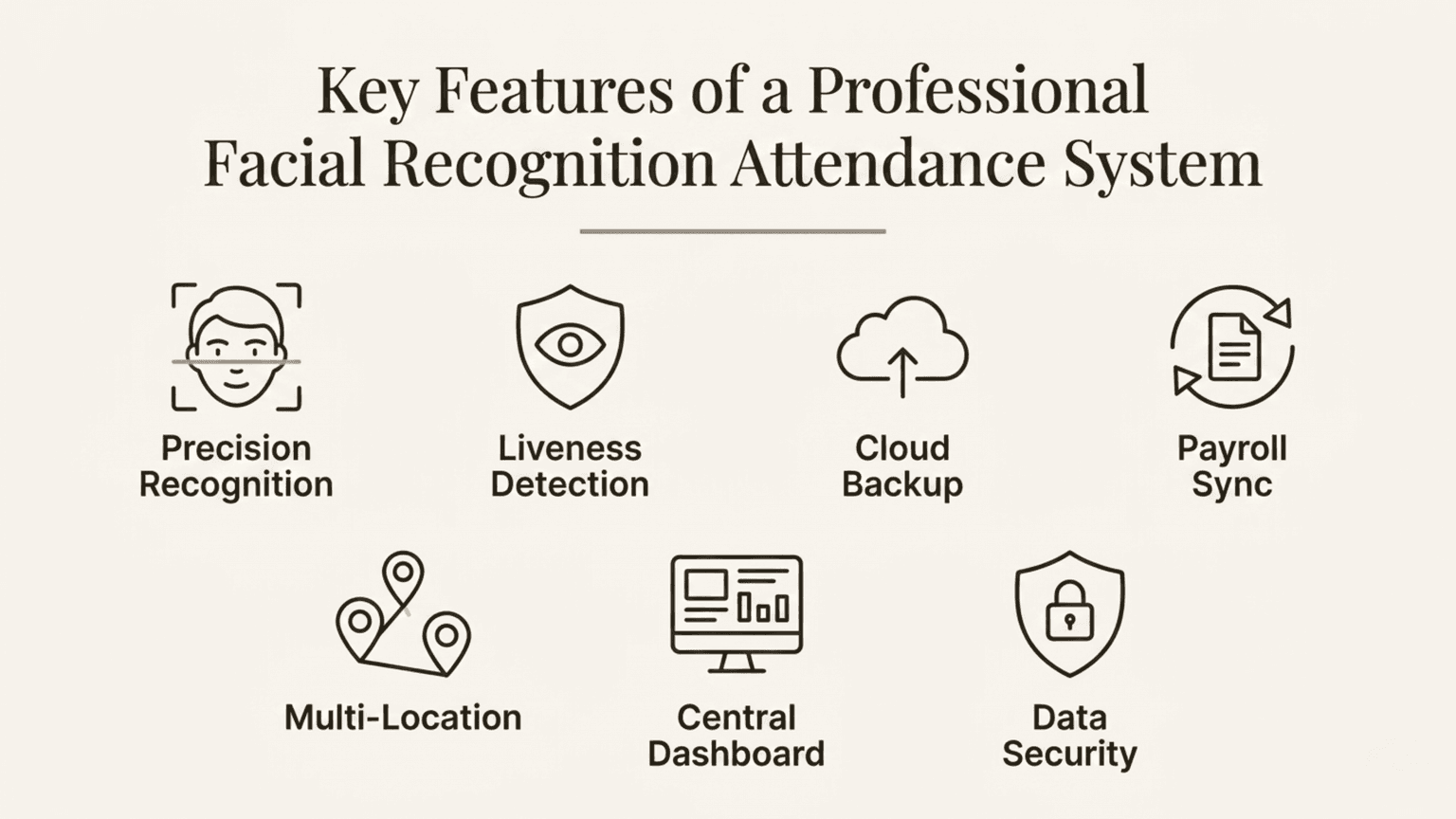
High-Precision Facial Recognition Technology
The core of any effective facial recognition system lies in its identification precision. A professional-grade system performs rapid identification across varying lighting conditions, angles, and facial expressions. This minimizes misidentifications and duplicate clock-ins, ensuring that attendance data remains accurate and reliable while mitigating the risk of labor disputes.
Liveness Detection to Prevent Photo or Video Spoofing
Given the concerns regarding "hacking" or bypassing facial recognition, liveness detection is a critical security feature. The system distinguishes between a live individual and a static image or video in real-time, effectively preventing the use of photos, recordings, or screenshots to cheat the system and significantly boosting anti-spoofing capabilities.
Automated Cloud Backups for Data Integrity
Attendance systems equipped with cloud architecture automatically back up all facial recognition clock-in records to secure cloud servers. This prevents data loss from hardware failure or human error and allows HR to instantly access historical records to satisfy internal audits or regulatory inspections by the Labor Department.
Real-Time Synchronization with Payroll, Leave, and Overtime Systems
A high-efficiency facial recognition system should synchronize seamlessly with payroll, leave, and overtime modules. By directly converting time and attendance data into the foundation for salary calculations, this integrated attendance system recommendation drastically shortens the HR month-end cycle and eliminates manual data-entry errors.
Multi-Location and Branch Management via Centralized Dashboard
For businesses operating across multiple offices or retail outlets, multi-location management is essential. Managing attendance records from different sites through a single, centralized backend enhances overall administrative efficiency and ensures a unified management policy across the entire organization.
Full Compliance with Privacy and Data Security Standards
A common concern for enterprises is whether a facial recognition clock-in system is legal. As long as the
system complies with the Personal Data (Privacy) Ordinance—by clearly stating the purpose of collection,
the intended use of data, and retention policies—it is both legal and secure. Our solutions utilize robust
encryption and access management to ensure complete peace of mind.
For a comprehensive demonstration of features, real-world case studies, or to inquire about the facial
recognition attendance solution best suited for your organization, please visit our official website. You may
also contact us immediately to arrange a product briefing or a free consultation to select your ideal
attendance system.
Time Clock System FAQs

How Much Does a Time Clock System Usually Cost?
Pricing depends on functionality. Traditional clocks are a one-time purchase, whereas facial recognition systems typically operate on a subscription model based on headcount. Long-term, the labor savings and efficiency gains of automated systems offer a superior ROI.
Can Fingerprint and Facial Clocking Be Used Together?
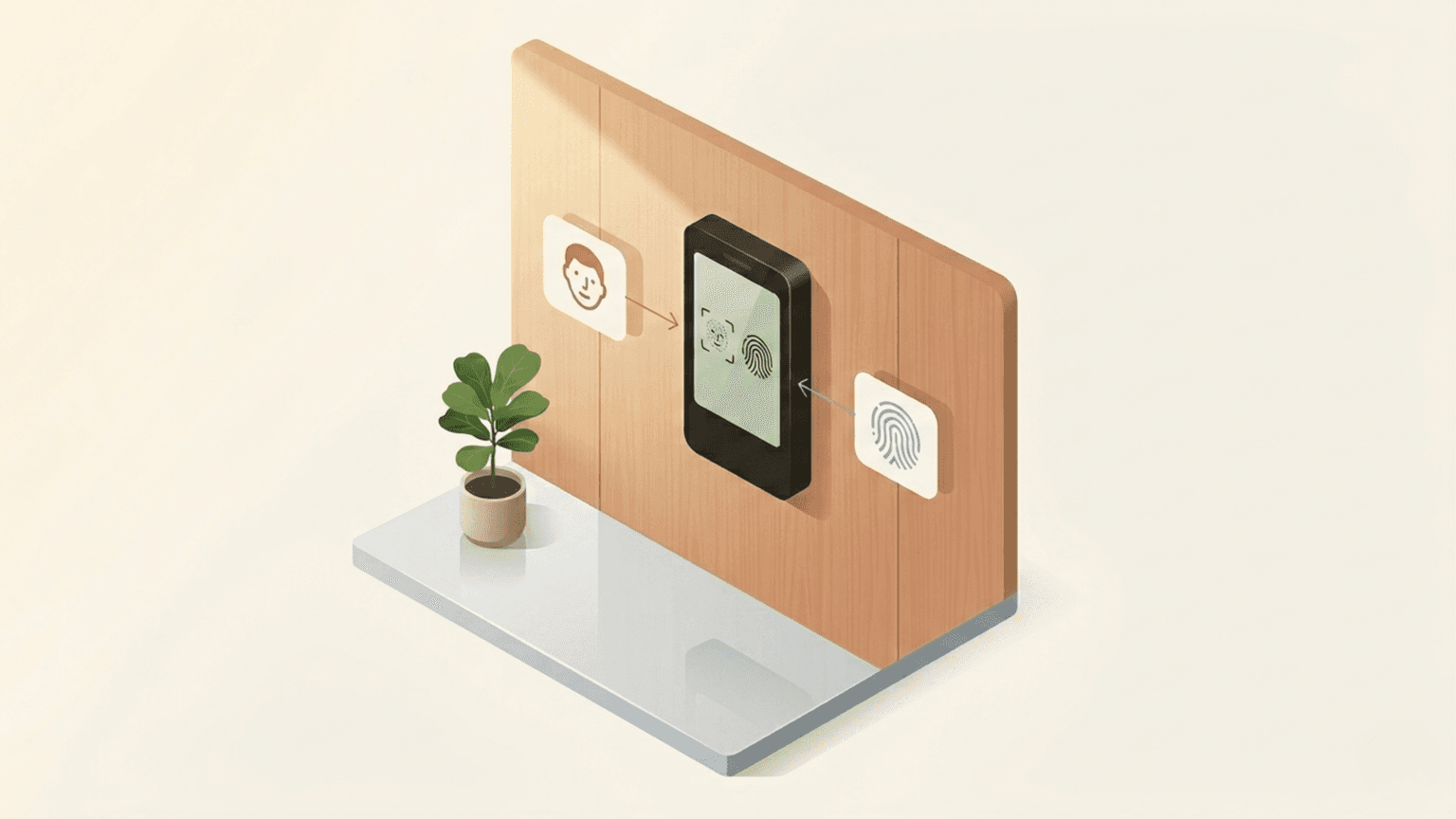
Yes. Many modern biometric readers support hybrid verification, combining fingerprint and facial recognition into a single time clock system to record attendance with precision. This provides greater convenience for a diverse workforce and serves as a reliable fail-safe backup. For enterprises seeking a phased upgrade, this hybrid architecture effectively balances operational flexibility with rigorous management requirements.

Can Existing Companies Upgrade to a Face Recognition Time Clock System?
In most cases, yes. Even if your organization currently utilizes traditional punch clocks or fingerprint scanners, many providers can facilitate a seamless upgrade to a facial recognition attendance system while preserving legacy attendance data. Whether a total hardware replacement is required depends on the compatibility of your existing infrastructure and the current scale of your organization.

Is the Facial Recognition Clock-In System Legal in Hong Kong?
In Hong Kong, facial recognition attendance systems are entirely legal provided they comply with the Personal Data (Privacy) Ordinance. Employers must clearly communicate the purpose of data collection, its intended use, and retention protocols to employees while implementing robust security measures. Businesses are encouraged to establish clear internal privacy policies to ensure full regulatory compliance.
Can Face Recognition Time Clock Systems Be Hacked?
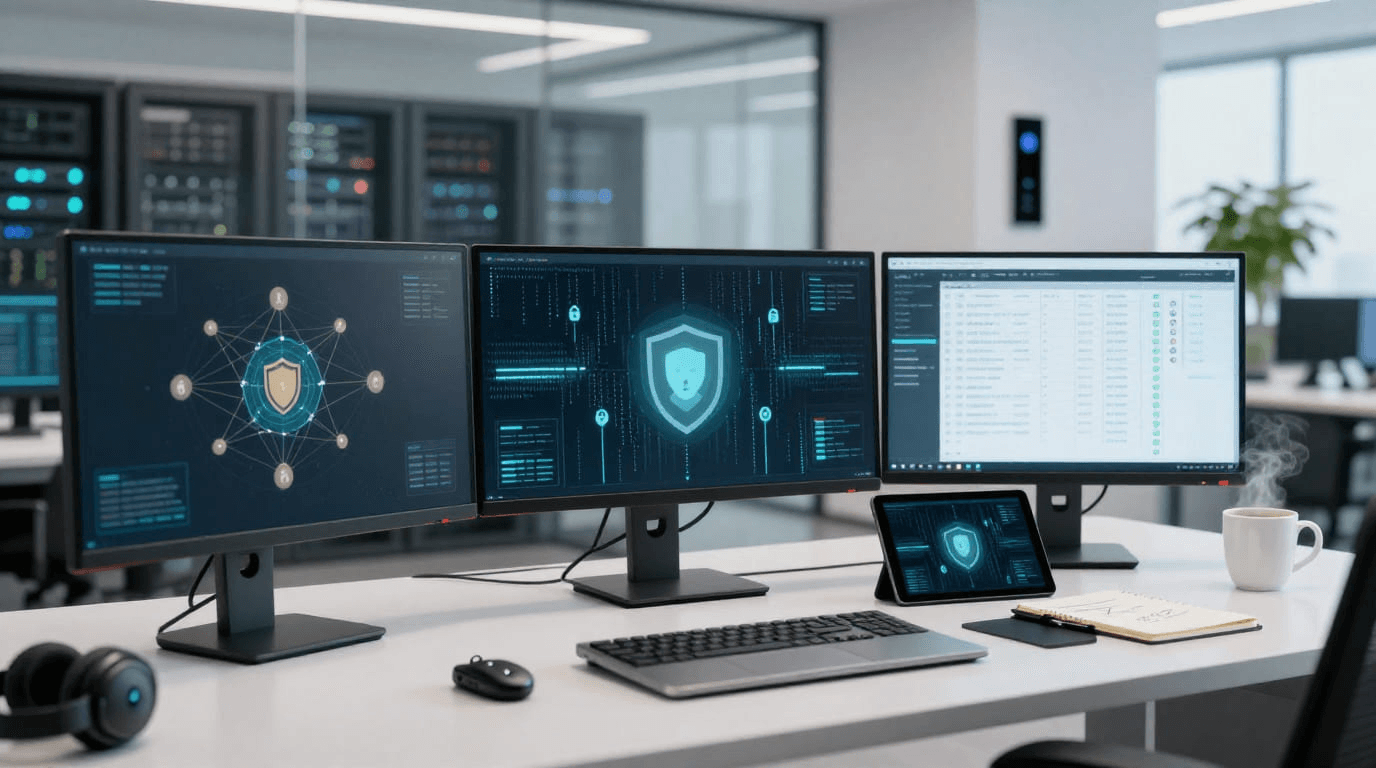
Systems engineered with professional-grade security protocols have drastically mitigated the risk of facial recognition being bypassed or "hacked." By integrating liveness detection, real-time biometric comparison, and advanced encryption, these systems effectively prevent fraudulent clock-ins using photos or videos. When evaluating an attendance system recommendation, it is vital to prioritize these protective features to ensure your attendance records remain authentic and indisputable.